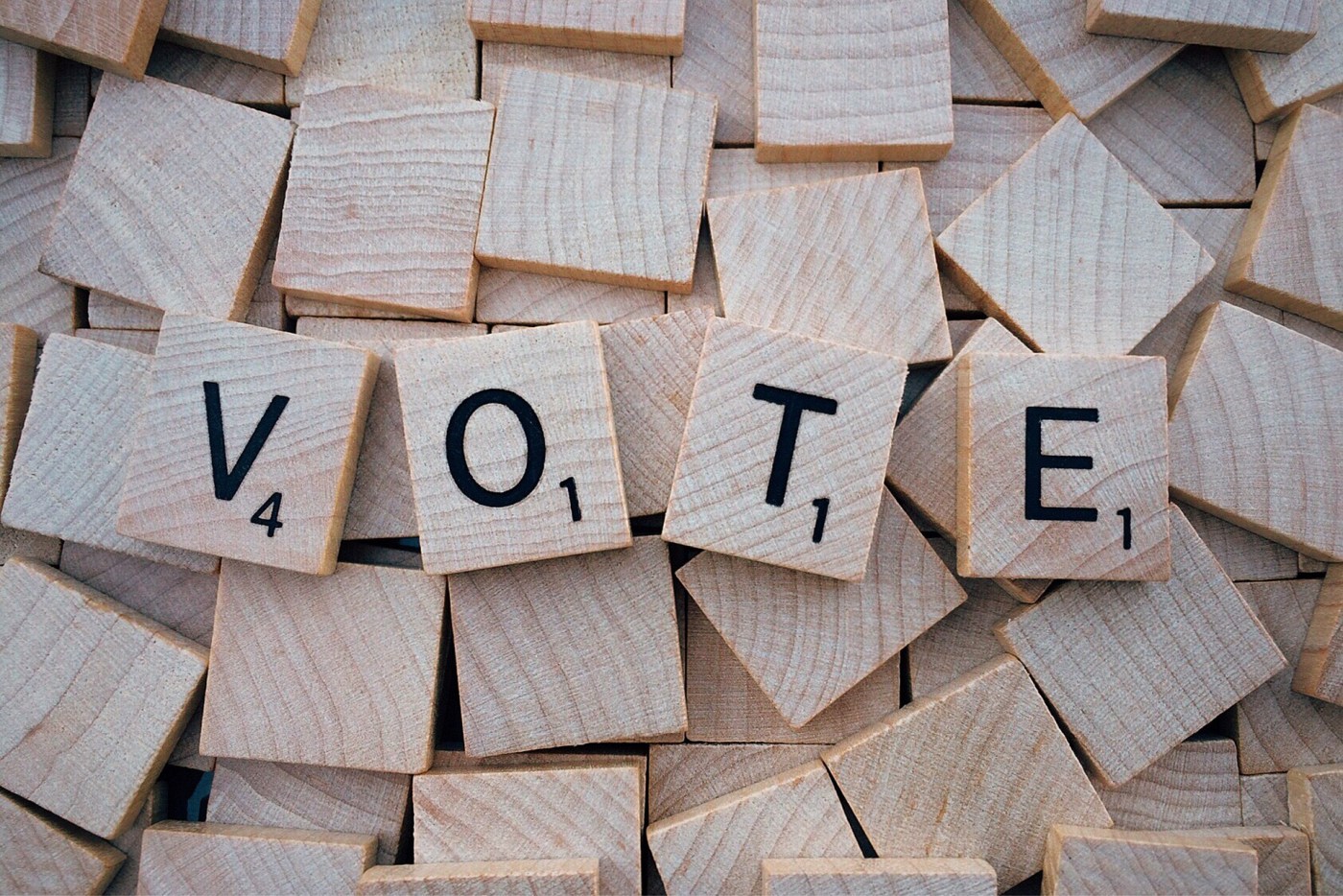
VOTE! VOTE! VOTE!
We think of November as election month. It’s accurate that our general election will be then, in seven months, looming close enough now for prognosticators to start ratcheting up their predictions and rhetoric. Mainstream tv networks are readying their countdown graphics. Some talk like it’s a regular time, and a regular election approaches. The reality in this particular “off-year” election however, is that important action is MUCH closer to hand than November. Truly vital action is required right now in this siege we’re facing, and trying to face down.
US politics refresher 101: the House of Representatives is up for re-election every two years. All of them. Each and every member of Congress who wants to come back in January, is on your local ballot this year. And not just in November. Most of us live in heavily gerrymandered congressional districts whose primaries lie ahead in a matter of weeks. You may also have primary races for Governor or Senator, and essential state & local legislative and executive roles on your ballot, too. Who wins all these primaries is crucial groundwork to how the general election campaigns will unfold. These primaries are imminent!
Take the four steps below asap, and encourage others to do the same.
Step 1: Verify your own voter registration at the State Board of Elections site. Avoid surprises when you arrive to vote in the primary. (That’s a North Carolina link; click here to verify registration in any state.)
Step 2: Make a plan to vote. Do you need to arrange caregiving? Change your work shift? Enlist help with some family voting early so others can go on Election Day? Do you have the ID ready that your state requires? Think all of this through now, and make a plan that works for you.
Step 3: Research your candidates. Use a sample ballot from your election board site or ballotpedia or use the “what’s on my ballot” link after selecting your state at US Vote Foundation page, which also connects you to candidates’ pages when available. Identify who’s running for what this spring in your district. Google the candidates. I’ve found the most reliable and meaningful data come from checking endorsement pages on campaign websites, reading features in local newspapers or local municipal sites, and reviewing transcripts of local candidate forums if they’ve been held. Yes, this takes a minute. Citizenship is work. Do it.
Pro Tip: get together with a small group and divvy up your candidate research ahead of time, to lighten the load and empower everyone to know more, in less time.
Step 4: Widen the electorate. Ask friends and neighbors if they’d like to ride share to the polls to vote. Encourage them to verify their registration status ahead of time, and make sure they know relevant dates and rules. Be an accurate information source: educate everyone you know about dates and sites for early voting and Election Day primary voting in your area.
Here in North Carolina, voter registration via in-person, online, and mail already closed for our primary election, which is Tuesday March 3 in all 100 counties. If you’re not registered yet, or your newly activated neighbor who’s finally ready to participate in elections hasn’t gotten themselves registered yet, our early voting includes an option for same day registration and runs from Thursday Feb 12 – Saturday Feb 28, 2026. Find your county’s early voting details at the NC Board of Elections site.
North Carolina politics refresher 101: if you’re registered with one of NC’s four recognized parties, you must vote that party’s primary ballot. If you’re registered unaffiliated, commonly called “independent,” you may choose either the Republican or the Democratic primary ballot when you arrive to vote. Those are the only two primary ballots available, because the other two parties don’t have primary candidates competing with one another.
Key callout: if you’re registered as Green or Libertarian in NC, consider re-registering (you’d have to do this at in-person early voting) as unaffiliated temporarily, to give yourself a voice in our primary elections. Or, you could choose to affiliate either R or D, and then vote the primary ballot of that party.
Not in North Carolina? Want to educate and activate your cousins in Missouri and Michigan? Find your state’s dates at US Vote Foundation and step up now to contact your networks. This doesn’t have to be a drive to change people’s minds. Get timely and accurate information to friends, family, colleagues, acquaintances, and more. Speak to all the people around you in all the circles in your life, who you know are as infuriated, offended and angry as we are with the white nationalism, racism, authoritarianism, misogyny, greed, corruption, hypocrisy and cruelty that virtually all elected Republicans so far have capitulated to espouse – or at least chosen not to decry.
Link to any state’s voter registration verification process at vote411.org and share the site with others around the country who need to look up and verify theirs.
Lots of our neighbors may have fallen previously into an “I’m not into politics” camp of inactive citizens. That’s no longer an option. To not vote is to endorse the current occupant of the White House and his revolting abuses of power. To not vote is to applaud the deaths and suffering caused by destroying USAID. To not vote is to spit on the graves of Keith Porter, Renee Good, Alex Pretti, and others less well known, and those not yet murdered by the over-funded, under-accountable minions of Secretary Noem and shadow secretary Lewandowski. To not vote is to sanction authorizing the president’s unelected son-in-law’s so-called diplomacy that simply lines the coffers of his family without regard for legality, ethics, or national security. To not vote is to condone the administration’s atrocious racism, which I post no links to elevate.
Keep the faith, and keep in touch.
 new moon resistance
Leave a comment